


The insulated drinkware market has moved beyond a simple competition around insulation performance. Product design, usage scenarios, brand positioning, and the way consumers connect with a product have become increasingly important.
Stanley, YETI, and Owala illustrate three different approaches within this broader shift. Their products and brand strategies highlight several directions that continue to shape the drinkware category: lifestyle positioning, performance, and product innovation.
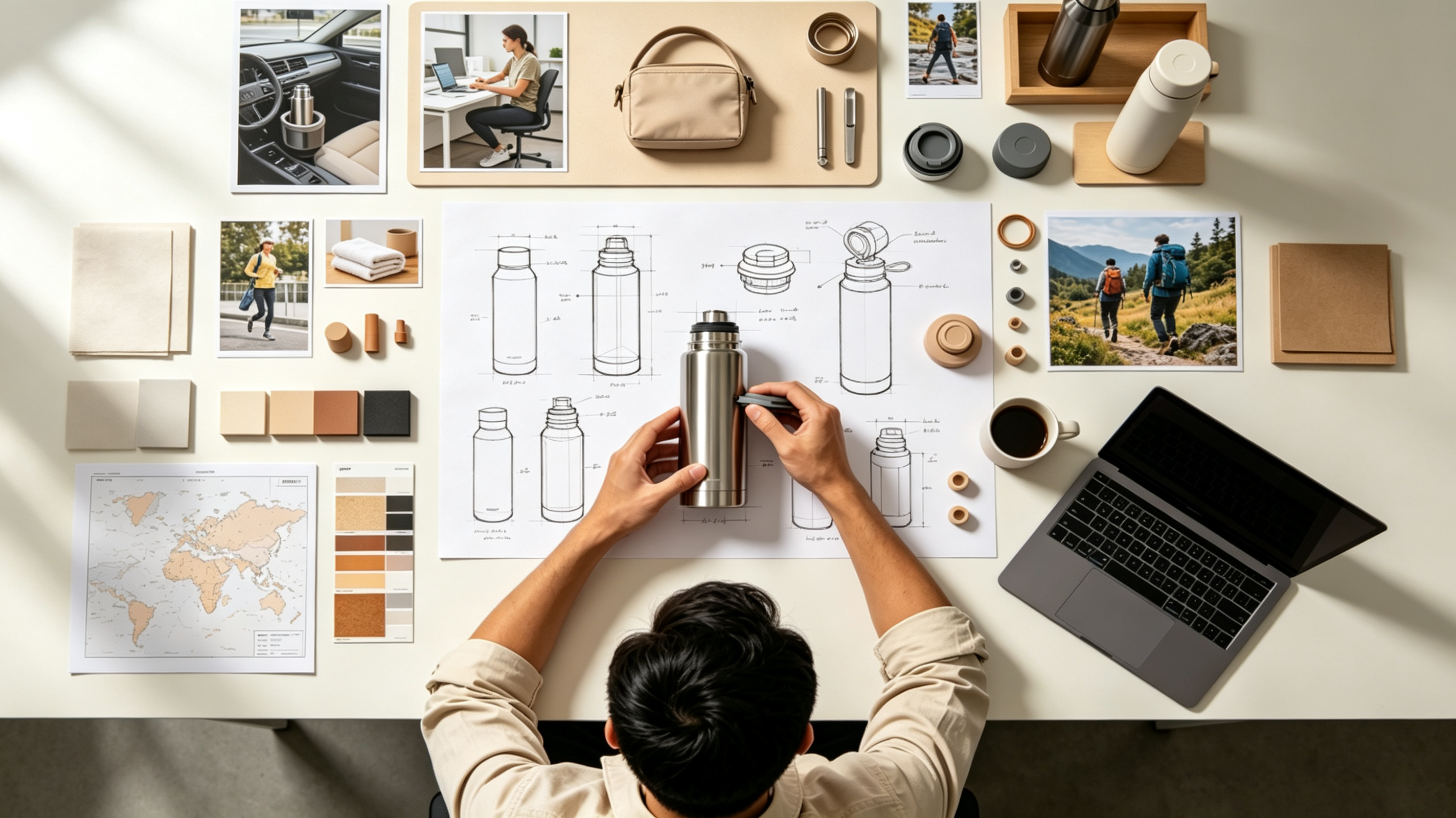
Stanley: From Functional Drinkware to Lifestyle Icon
Stanley’s evolution from a maker of durable drinkware into a lifestyle brand demonstrates how an established product category can create new demand beyond its original functional purpose. Durability and insulation remain core product benefits, while design, color, and brand identity have broadened the reasons consumers choose and use its products.
The Quencher illustrates this shift. Once associated primarily with practical hydration, the insulated tumbler has become part of consumers’ daily routines, from the gym and workplace to social outings. Its range of colors, finishes, and collaborations gives consumers more ways to express personal taste, while social media helps reinforce its cultural relevance. For drinkware brands, the broader lesson is that product differentiation can extend beyond performance specifications to include visual identity, everyday usability, and emotional appeal.
- What Brands Can Learn
Stanley shows how understanding consumers’ daily routines and style preferences can open up new opportunities for drinkware brands. When developing a new product line, brands should consider how the product will be carried, used, and incorporated into everyday life, translating these insights into decisions around form, capacity, handles, color, and finishes. Performance remains the foundation, while thoughtful design and lifestyle relevance can give consumers more reasons to choose a product.
YETI: Building Around Performance and Durability
YETI has built its brand around performance, durability, and reliability in demanding conditions. Its Rambler range spans bottles, tumblers, mugs, and other drinkware formats, with product features tailored to different uses. Stainless steel construction, double-wall vacuum insulation, practical lid designs, and ease of cleaning reinforce a consistent focus on long-term usability.
This performance-led positioning is supported by attention to product safety and testing. YETI states that its drinkware undergoes testing by accredited third-party laboratories to assess compliance with applicable regulations across markets, alongside testing for durability. For drinkware brands, YETI offers a different model of differentiation: rather than relying primarily on lifestyle appeal, a brand can build lasting value through dependable performance, practical design, and product quality that consumers can trust over time.
- What Brands Can Learn
For YETI, a clear performance promise serves as a practical guide for product development. Brands targeting outdoor, travel, or other demanding applications need to translate intended use into specific design and testing requirements, from material selection and insulation to lid structures, accessories, and durability testing. A strong product position is most credible when its performance claims are supported by the product itself.
Owala: Product Innovation Through Usability
Owala illustrates a user-centered approach to product differentiation. Its FreeSip bottle integrates a built-in straw with a separate wide-mouth drinking opening, allowing users to sip upright or tilt the bottle back to drink more freely. This design addresses a familiar trade-off between straw-based convenience and direct drinking, turning a small structural innovation into a noticeable everyday benefit. A broad range of colorways further gives the product a distinctive visual identity.
- What Brands Can Learn
Owala illustrates how a focused improvement in usability can become a meaningful point of product differentiation. Rather than redesigning an entire bottle, brands can identify where existing products fall short and improve individual components, such as lids, drinking openings, grips, carrying mechanisms, or cleaning access. For OEM and ODM development, component-level improvements can create clear product differentiation while retaining an established bottle platform. The key is to solve a recognizable user need and make the benefit immediately apparent.
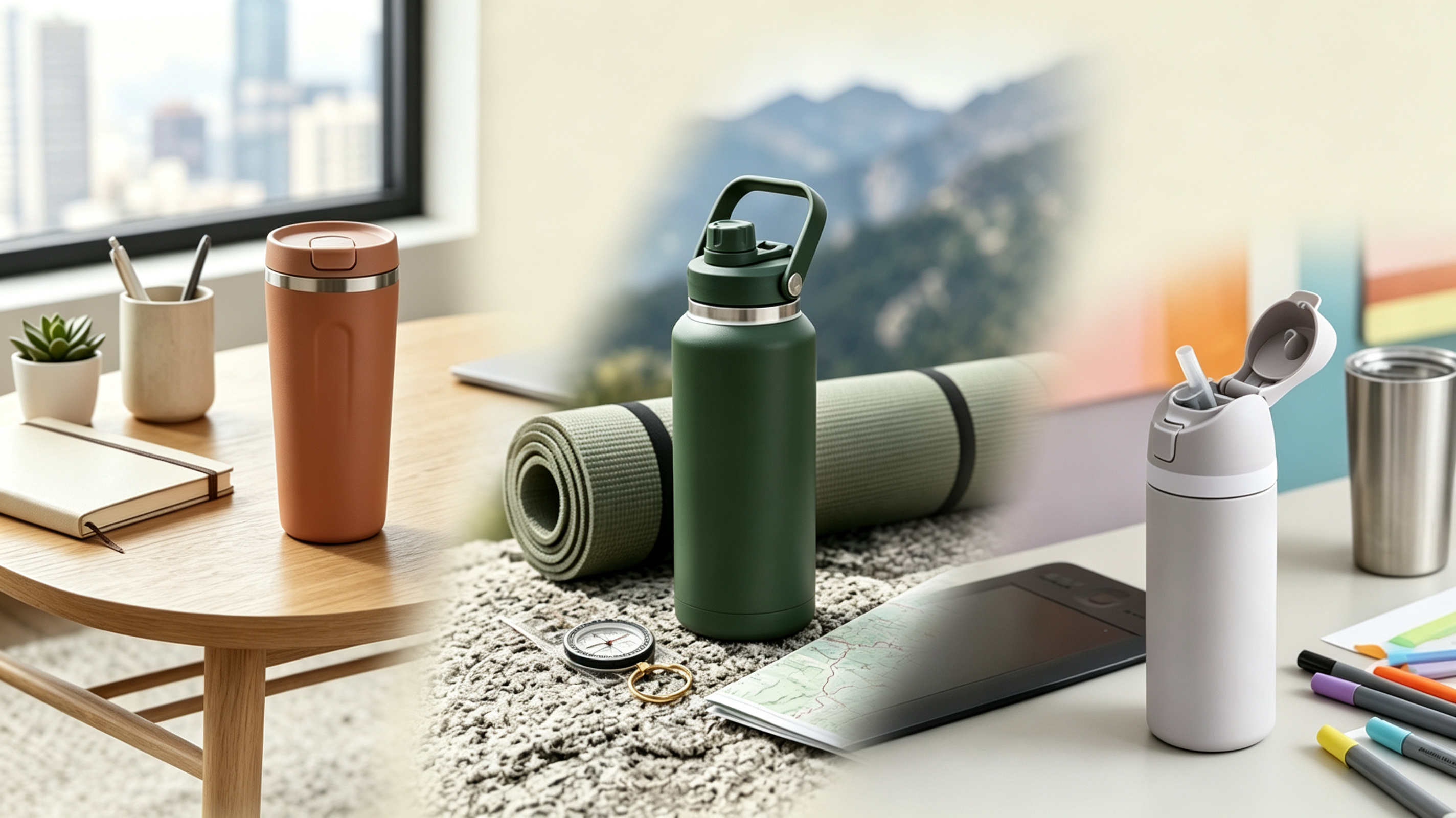
Three Directions in Drinkware Development
Looking across these leading brands, three broad approaches stand out:
|
Brand |
Development Direction |
Product Focus |
|
Stanley |
Lifestyle positioning |
Everyday use, design, community, and visual identity |
|
YETI |
Performance positioning |
Durability, insulation, outdoor use, and reliability |
|
Owala |
Functional innovation |
Lid design, drinking experience, usability, and visual differentiation |
These approaches are not mutually exclusive. A drinkware brand can combine strong performance with distinctive design and a clearly defined lifestyle or usage scenario.
What This Means for New Product Development
The category is gradually moving from “a bottle that keeps drinks hot or cold” toward products designed around a clearer user, use case, and experience. For brands developing new drinkware, this can affect several parts of the product:
- Functionality
Insulation remains fundamental, but lid structures, drinking systems, portability, handles, cleaning, and accessories can create additional value.
- Usage Scenario
Products can be developed around specific applications such as hiking, commuting, office use, fitness, travel, or everyday hydration. A defined use case can make decisions about capacity, structure, and accessories more focused.
- Design & CMF
Color, shape, texture, coating, and surface treatment can help differentiate products and establish consistency across a product family.
- Product Differentiation
Differentiation does not always require a completely new product category. A combination of functional improvement, distinctive design, and a clearly defined target user can create a more recognizable product proposition.
What This Means for OEM and ODM Development
Different approaches to product differentiation lead to different manufacturing priorities. Lifestyle-driven drinkware places greater demands on color consistency, surface finishes, and packaging. Performance-focused products require materials and structures suited to their intended use, supported by appropriate testing. Usability-led designs call for careful attention to lid mechanisms, component fit, sealing, and ease of cleaning. These requirements need to be addressed early in product development. A change in lid structure, for example, can affect tooling, component compatibility, sealing performance, and assembly. Color or finish changes may require additional sampling to confirm the intended appearance can be maintained in mass production.
For OEM and ODM projects, the challenge is to carry the product concept through engineering, sampling, validation, and full-scale production without losing the qualities that set it apart. Manufacturing capability matters, but so does the ability to coordinate product design, materials, components, surface treatments, assembly, and quality control throughout the process.
Key Takeaway
Stanley, YETI, and Owala illustrate three distinct approaches to drinkware differentiation: lifestyle appeal, performance and durability, and user-focused functionality. Each builds on the same principle: a product needs a clear reason for consumers to choose it over alternatives.
For brands developing a new drinkware line, the starting point is to define the target consumer, the need the product addresses, and the features that make it stand out. These decisions should guide product design, material selection, lid systems, finishes, and performance testing. The goal is to develop a product that delivers a recognizable benefit to consumers and maintains that value through consistent mass production.