


What Makes a Stainless Sports Water Bottle Suitable for Sports and Outdoor Use?
A stainless sports water bottle needs to perform in situations where the product is frequently carried, handled and used during movement. Compared with a standard everyday bottle, sports and outdoor models often focus more on portability, grip, drinking convenience and durability.
Bottle geometry plays an important role. A slimmer body can be easier to hold during exercise, while a wider base can provide greater stability when the bottle is placed on a desk, bench or outdoor surface. Carry handles, easy-open lids and straw systems can also be incorporated depending on the intended application.
For brands developing sports drinkware, these details should be considered as part of the product structure rather than added as separate features. The right configuration depends on how the bottle is expected to be used and who it is designed for.
Stainless Steel or Plastic for Sports Bottles?
Both stainless steel and plastic are used in sports drinkware, but they support different product priorities. Stainless steel offers good durability, corrosion resistance and a more premium appearance, making it suitable for reusable sports bottles positioned for longer-term use. Plastic can provide a lower overall weight and may be more appropriate where minimizing weight is the primary concern.
For sports, outdoor and lifestyle brands, stainless steel also provides more opportunities for differentiation through bottle geometry, colors, surface finishes and branding. This makes it a practical material for products positioned beyond basic hydration.
Choosing the Right Structure, Capacity and Lid
The bottle structure should match the intended sports or outdoor application. For stainless sports water bottles, a double-wall vacuum insulated structure provides reliable temperature retention while supporting a durable and premium product design. It helps reduce heat transfer and keeps beverages hot or cold for longer during workouts, cycling, hiking, camping and other outdoor activities.
Capacity should be selected together with the use case. Smaller bottles may work well for gym sessions and short activities where portability is important, while larger capacities are more suitable for cycling, hiking, camping and other outdoor situations where access to drinking water may be limited.
Lid design is equally important because it affects drinking speed, sealing and handling. Screw lids offer a straightforward and secure structure, while flip lids and straw systems can make drinking easier during movement. For sports and outdoor products, leak resistance, opening method, one-handed operation, seal durability and cleaning should all be considered during development.
Surface Finish and Customization for Sports Drinkware
Sports bottles are frequently handled, placed on different surfaces and carried inside bags, so the exterior finish needs to balance appearance and durability. Powder coating is commonly used for sports and outdoor drinkware because it provides a durable colored surface and allows a wide range of custom colors. Laser engraving, printing and other decoration methods can be used for logos and branding.
For branded products, customization can also extend to the bottle structure, capacity, lid configuration and packaging, particularly for OEM and ODM projects. These elements should be planned together because changes to the bottle shape, components or finish may affect tooling, assembly and production cost.
For large-volume orders, consistency is especially important. Color, surface finish, dimensions and component fit should remain stable across production batches so that the finished bottles maintain a consistent appearance and performance.
What Should Brands Check Before Mass Production?
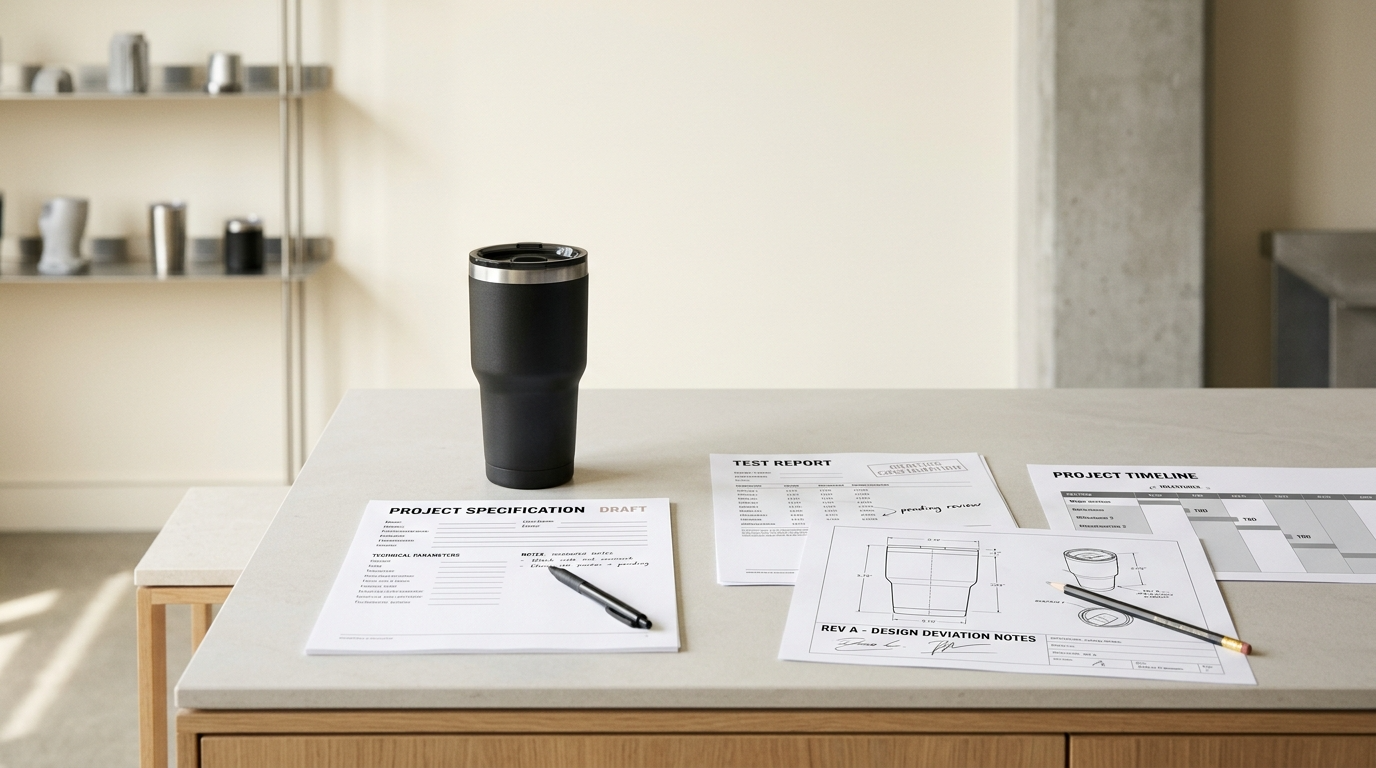
Before approving a stainless sports water bottle for mass production, brands should evaluate the product according to its actual sports or outdoor application rather than sample appearance alone.
Key areas include:
l Stainless steel material and bottle structure
l Insulation and temperature-retention performance, where applicable
l Lid sealing and leak resistance
l Surface durability and decoration quality
l Dimensions, assembly and overall production consistency
These requirements should be confirmed during development so that the approved sample can be translated into clear production specifications.
For a custom sports bottle, the transition from prototype to mass production is particularly important. Forming, welding, vacuumization, surface treatment, component assembly and inspection all need to be controlled so that the approved design can be reproduced consistently at commercial volumes.
Choosing a Manufacturer for Stainless Sports Water Bottles
A suitable manufacturer should be able to support the product from development through production. When evaluating a supplier, brands should consider its experience with stainless steel forming, welding, vacuum insulation, surface finishing, plastic components, assembly and quality inspection. For projects involving custom bottle structures or functional changes, OEM and ODM development capability is also important.
Manufacturing capability matters because sports and outdoor products often combine several requirements in one design. The supplier needs to manage the bottle structure, lid system, surface finish and other components as a complete product rather than treating each part independently.
Ansune Stainless Sports Water Bottle Manufacturing
Ansune supports stainless steel sports and outdoor drinkware development for brands and bulk buyers. Different bottle structures, capacities, lid systems, colors and surface finishes can be developed according to the intended application and product positioning. For OEM and ODM projects, product specifications can also be adjusted around the target market and brand requirements.
From stainless steel forming and vacuum insulation to surface treatment, assembly and inspection, each production stage contributes to the final quality and consistency of the sports water bottle.
Summary
A stainless sports water bottle should be designed for its intended sports or outdoor application. Lightweight single-wall bottles suit short workouts and daily use, while double-wall vacuum-insulated bottles with larger capacities and secure lids are better for hiking, cycling, camping and longer activities.
Brands should evaluate portability, grip, drinking convenience, leak resistance, insulation and surface durability together. For OEM and ODM projects, material, structure, lid, finish, logo and assembly requirements should be confirmed before mass production to ensure consistent quality and branding.