


Overview
Consumer expectations are shaped by how drinkware performs in everyday situations, for instance, during commutes, at work, in the car, at home and on the go.
By reviewing retail customer feedback across different drinkware categories, several recurring priorities emerge. Consumers consistently look for reliable insulation, secure lids, easy-to-clean structures, durable components, practical dimensions and a comfortable drinking experience.
These insights provide useful reference points for product development and design decisions in the insulated drinkware industry.
1. Insulation Performance
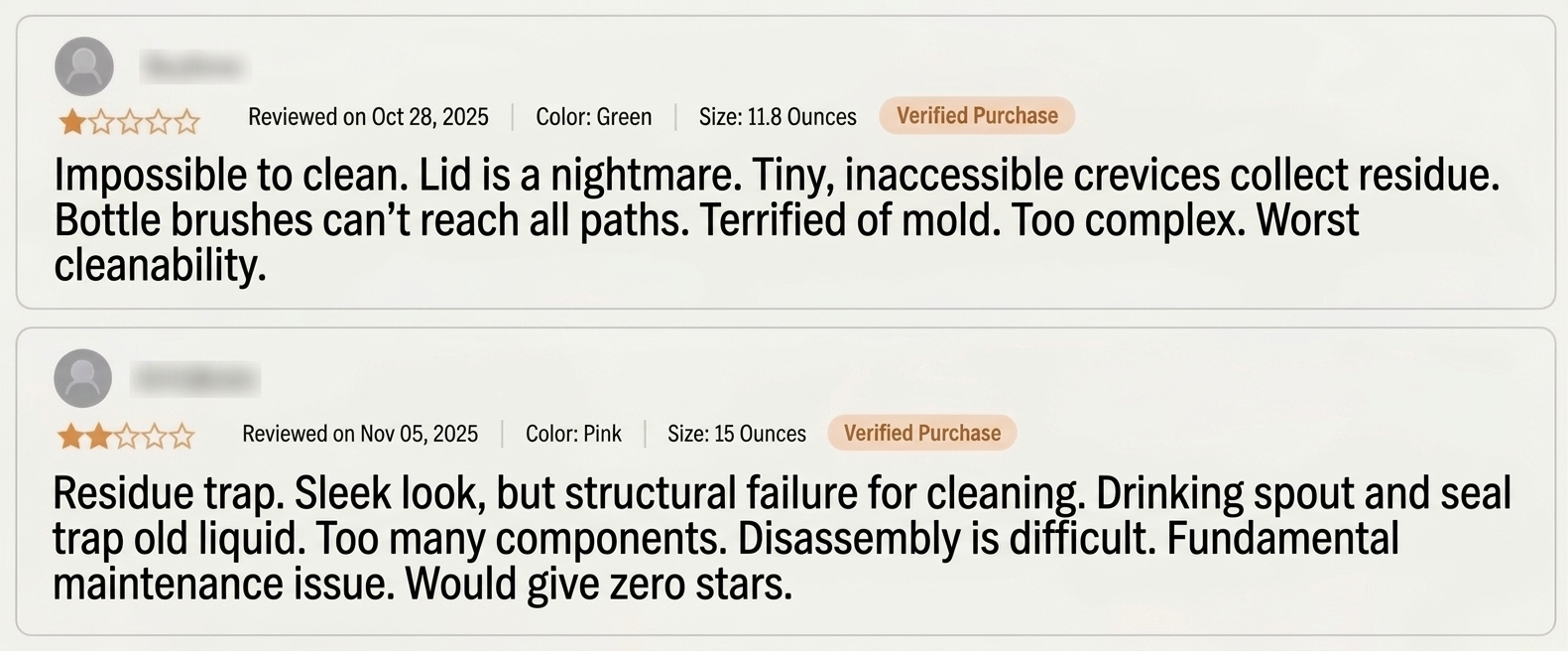
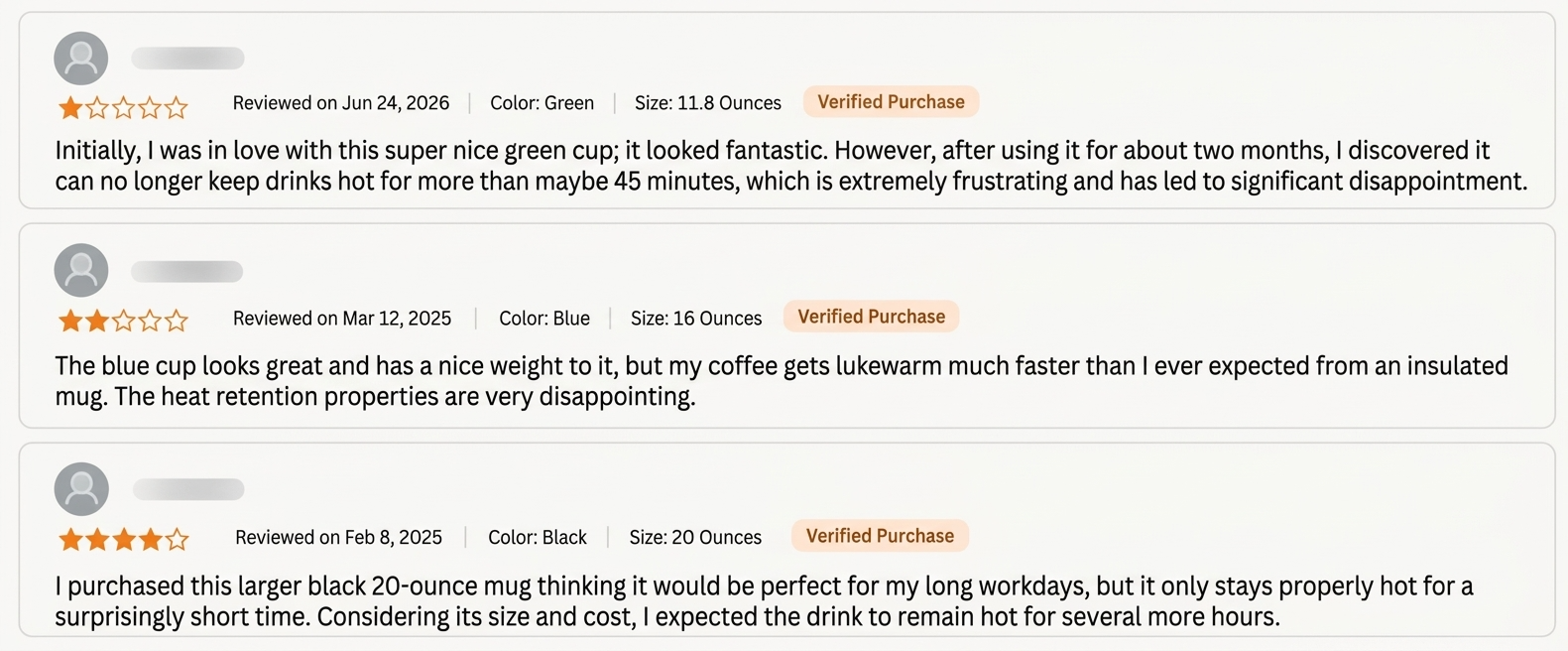
Insulation is one of the most visible aspects of an insulated drinkware product. Consumers may become dissatisfied when a hot beverage cools much sooner than expected or when insulation performance declines during continued use. In everyday scenarios such as workdays, commuting and extended periods away from home, consumers expect temperature retention to remain consistent with the product's intended use.
Key Consumer Expectations
l Reliable Heat Retention
Consumers expect beverages to stay hot or cold for a practical period of time without losing temperature too quickly. Insulated drinkware should perform effectively for both hot beverages such as coffee and tea and cold beverages such as water and juice.
l Performance matched to use case
Consumers expect thermal performance to fit the way they use their drinkware, whether they need to keep coffee or tea warm during a workday, maintain cold water during a commute, or preserve beverage temperature while traveling or spending extended periods away from home.
l Consistent Performance
Consumers expect insulation to remain effective through repeated daily use, with dependable hot and cold temperature retention rather than a noticeable drop in performance as the product is used, cleaned and handled over time.
Product Development Insight
Thermal performance is influenced by the complete product structure, including vacuum insulation, material construction, lid design and sealing performance. Testing should therefore reflect the intended application and use conditions.
2. Leak-proof & Lid Security
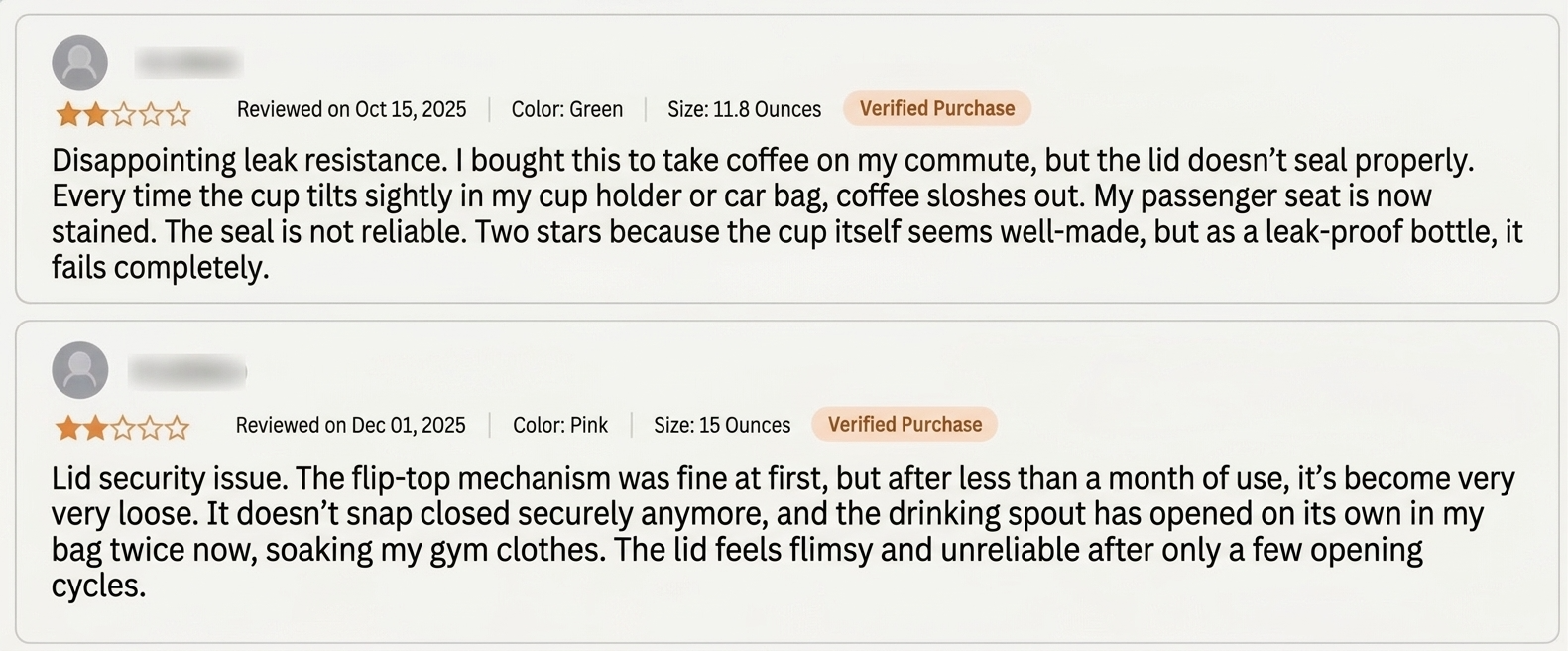
A secure lid is essential when drinkware is carried in bags, vehicles or during commuting. Leakage can significantly affect the user experience, while loose, difficult-to-use or unreliable lid mechanisms can reduce confidence in the product. Consumers expect the lid and sealing system to remain dependable not only when the product is new, but also through repeated everyday use.
Key Consumer Expectations
l Reliable Sealing
Consumers expect drinkware to remain securely sealed when tilted, carried or transported, helping prevent leaks during commuting, travel and other everyday activities.
l Secure Lid Components
Lids, seals and connected components should remain firmly in place through repeated opening, closing and handling without becoming loose or affecting the product's sealing performance.
l Controlled Opening & Dispensing
Opening, closing and dispensing mechanisms should operate smoothly and predictably, while reducing the risk of accidental opening or unintended liquid release during everyday use.
l Useful Accessories
Accessories such as straws, handles and drinking components should provide clear functional value, work reliably with the main product and support the intended use scenario.
Product Development Insight
Leak resistance depends on more than the sealing gasket. Lid geometry, threads, tolerances, sealing surfaces and component assembly can all affect performance. The interaction between these elements should be considered as a complete sealing system to support reliable performance during repeated daily use.
3. Easy Cleaning
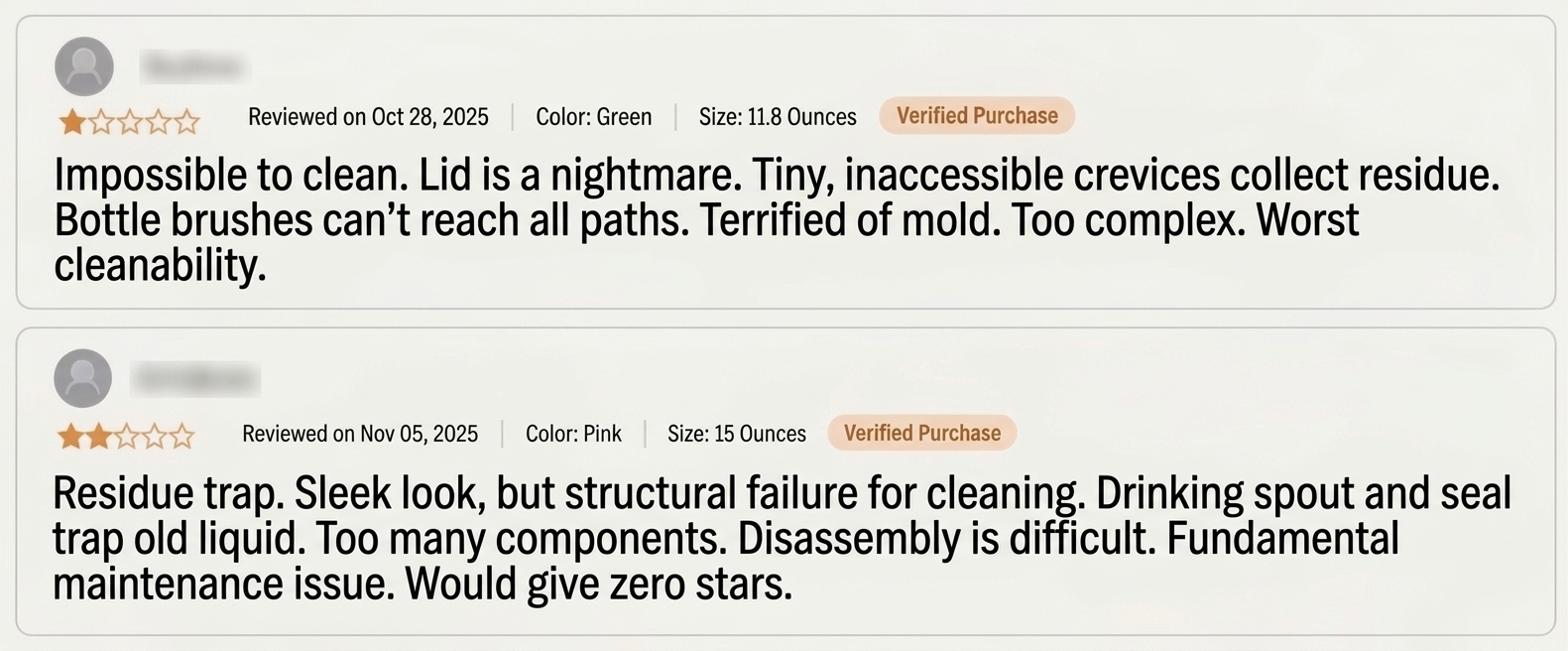
As drinkware incorporates lids, straws, seals and other components, cleanability becomes an increasingly important part of the everyday user experience. Consumers generally prefer products that are easy to disassemble, rinse and maintain, particularly for parts that come into frequent contact with beverages.
Key Consumer Expectations
l Accessible Components
Frequently cleaned parts such as lids, straws and seals should be easy to reach, remove and rinse without requiring complicated disassembly.
l Reduced Residue Traps
Consumers are sensitive to narrow gaps, enclosed areas and other hard-to-reach structures where beverage residue can accumulate and become difficult to remove.
l Practical Maintenance
Routine cleaning should be straightforward and manageable, without requiring excessive time, specialized tools or complicated cleaning procedures.
Product Development Insight
Cleanability should be considered during structural design. Component count, internal geometry, seal placement and access to drinking pathways can all affect how easily a product can be cleaned and maintained throughout regular use.
4. Durability & Surface Quality
Consumers often assess product quality through visible and frequently handled components, not just the main body. Loose handles, damaged lids, detached plastic parts, scratches, dents and deteriorating finishes can all affect how durable and reliable a product feels in everyday use.
Key Consumer Expectations
l Secure & Durable Components
Handles, lids, plastic parts and decorative elements should remain securely attached and functional through repeated opening, carrying, cleaning and everyday use.
l Consistent Surface Quality
Consumers expect drinkware to maintain a clean and consistent appearance, with surfaces and finishes that resist noticeable scratches, dents, chipping, peeling and other visible signs of premature wear.
l Resistance to Everyday Impact
Drinkware is often exposed to drops, knocks and contact with hard surfaces during normal use, so consumers expect the product to withstand reasonable everyday impact without significant deformation or loss of function.
Product Development Insight
Durability should be considered across the complete product system rather than evaluated only on the main body. Material selection, component interfaces, joining methods, structural design, coating adhesion and packaging protection can all influence how well a product maintains both its function and appearance over time.
5. Portability & Capacity
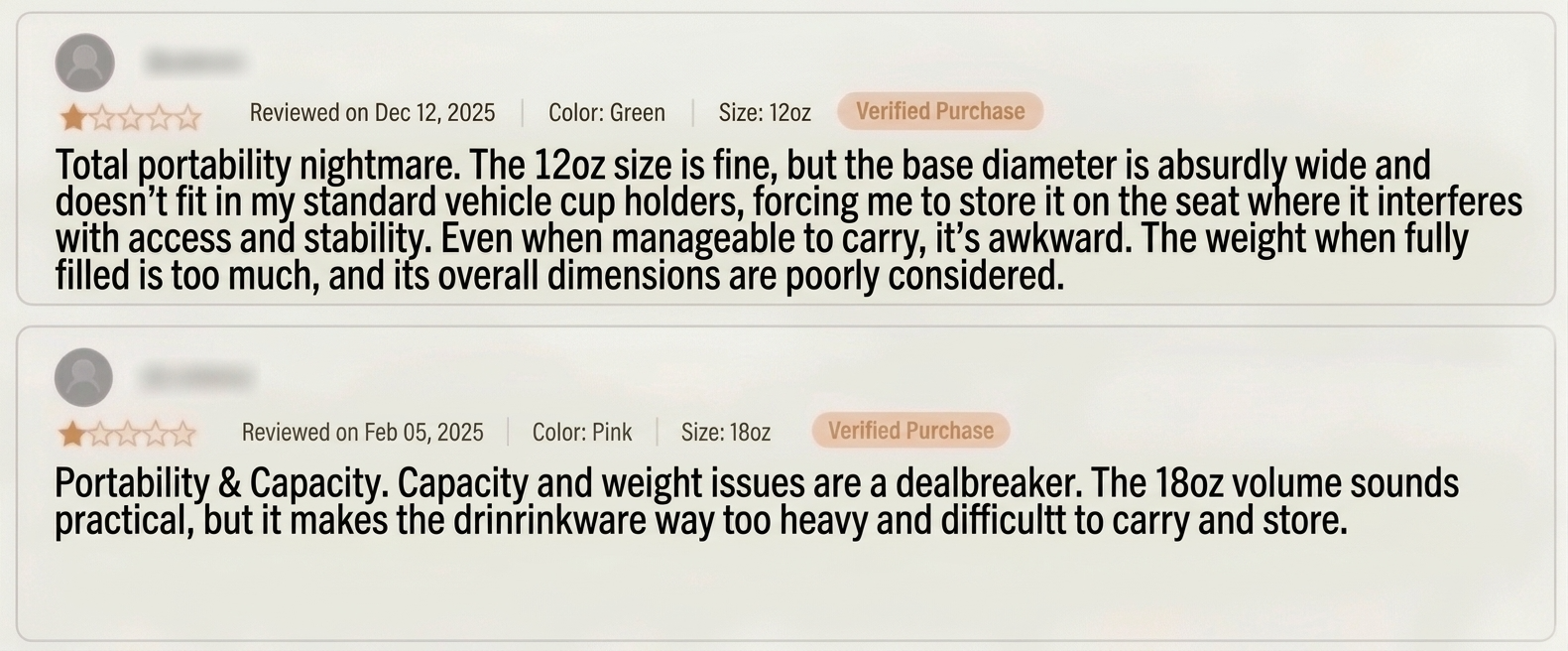
Consumers balance capacity with everyday convenience. A drinkware product can become difficult to carry, too heavy when filled, or incompatible with common vehicle cup holders when its dimensions are not suited to the intended use.
Key Consumer Expectations
l Practical Size, Capacity & Weight
Consumers want sufficient capacity for daily use while keeping the product manageable to carry, store and handle, particularly when fully filled.
l Vehicle Compatibility
For drinkware used on the go, consumers expect the base diameter and overall dimensions to fit common vehicle cup holders securely without interfering with access or stability.
Product Development Insight
Capacity, dimensions, weight and stability need to be considered together. Increasing volume or insulation can improve functionality but may also make a product heavier, bulkier or less compatible with common everyday environments.
6. Drinking Experience & Accessories
The drinking interface is used frequently, so excessive suction, poor liquid flow or inconvenient drinking mechanisms can quickly affect the user experience. Retail feedback also highlights expectations around practical drinking accessories.
Key Consumer Expectations
l Smooth & Comfortable Drinking
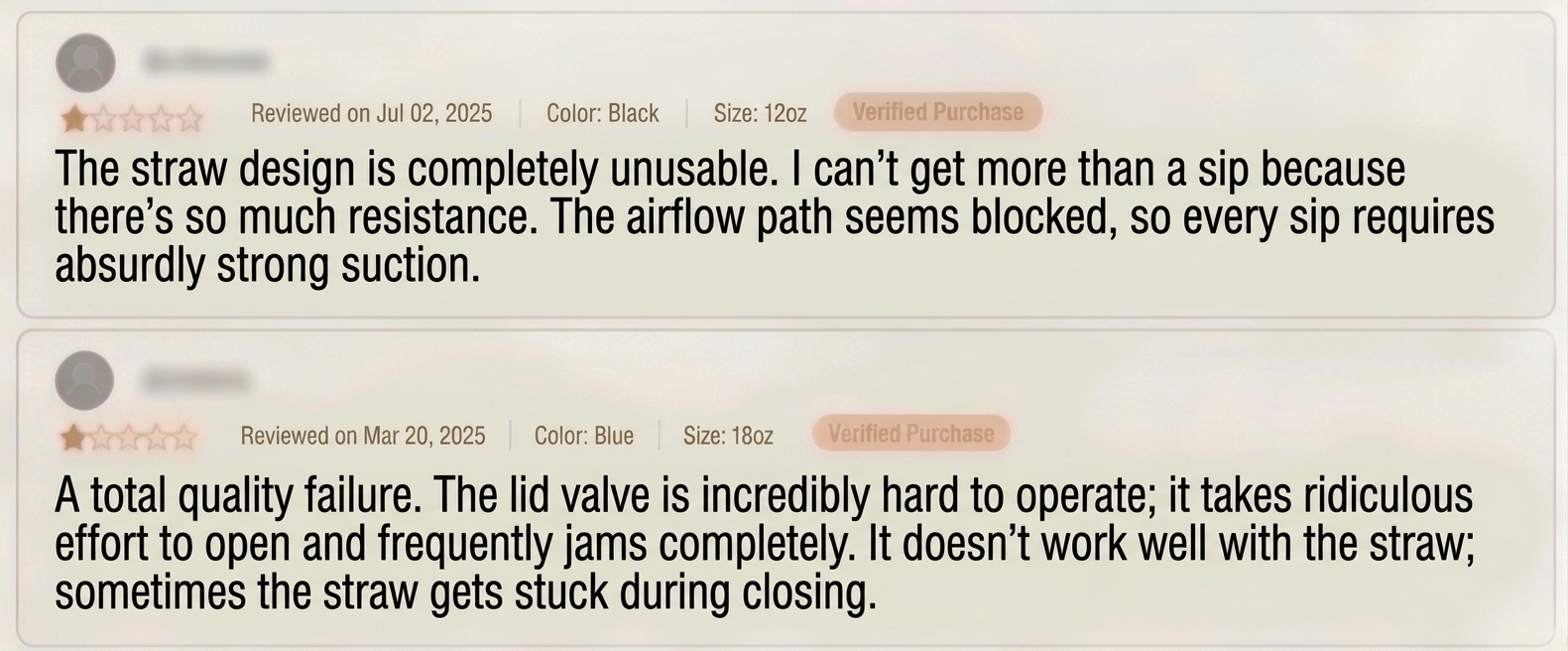
Consumers expect liquid to flow naturally through the drinking opening or straw without excessive suction, resistance or awkward positioning, allowing comfortable use throughout the day.
l Easy-to-Use Drinking Components
Lids, straws, valves and other drinking mechanisms should be intuitive to operate and require reasonable effort, with components that work smoothly together during opening, drinking and closing.
l Functional Accessories
Accessories such as straws, handles and drinking components should offer clear practical value, be appropriate for the intended use scenario and integrate effectively with the main product.
Product Development Insight
For straw-based drinkware, poor airflow or an unsuitable straw and valve design can make drinking noticeably harder. The drinking system should therefore be designed to maintain smooth liquid flow without requiring excessive suction or effort.
Summary
Recurring consumer feedback reveals that product satisfaction is shaped by much more than basic specifications. Thermal performance, leak resistance, cleanability, component durability, portability and drinking comfort all affect how consumers experience drinkware in everyday use.
For Ansune, these insights provide a practical reference for translating end-user expectations into product development considerations. By looking at recurring consumer feedback alongside product structure, materials, components and manufacturing processes, Ansune can help B2B customers identify potential usability concerns earlier and develop drinkware that is better aligned with real market expectations.